Irregular Astigmatism, Corneal Ectasia & Post‑Surgical Vision Loss
Not all astigmatism is created equal. For some patients, vision distortion goes far beyond a simple glasses prescription, especially after corneal trauma, prior eye surgery, or progressive conditions like ectasia. If you’ve been told your astigmatism is “irregular,” or if vision still feels off despite updated lenses, you may need more advanced care.
At Cornea and Contact Lens Institute of Minnesota, we specialize in managing irregular corneal conditions and designing customized contact lenses to restore clarity and comfort, even in the most complex cases.
What Causes Irregular Astigmatism?
Irregular astigmatism occurs when the surface of the cornea becomes uneven or asymmetrical, causing distorted vision that glasses or soft lenses can’t fully correct. It’s not just a stronger prescription; it’s a structural change in the front of the eye that alters how light is focused. Common causes include:
- Post-surgical ectasia: A rare but serious complication of LASIK or other corneal surgeries, where the cornea becomes progressively weaker or unstable.
- Corneal trauma or scarring: Injury or infection (like herpes simplex keratitis) can lead to long-term changes in the cornea’s smooth surface.
- Corneal transplants or grafts: Even after successful surgery, the eye’s curvature may remain irregular, requiring specialized vision correction.
- Degenerative corneal diseases: Conditions like pellucid marginal degeneration (PMD) or keratoglobus can mimic keratoconus and also lead to irregular astigmatism.
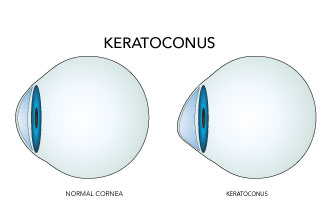
- Keratoconus and related disorders: These conditions thin and reshape the cornea over time, often creating a cone-like protrusion.
Irregular astigmatism is a category, not a single diagnosis, and identifying the cause is critical to finding the right treatment path.
Why Standard Lenses Fall Short
If you’ve been cycling through new prescriptions without real improvement, the problem may not be your lenses—it’s your cornea.
Irregular corneal conditions warp the front surface of the eye, meaning traditional glasses or soft contacts can’t fully compensate for the uneven way light enters. Instead of bending light into a single sharp focal point, the eye splits or scatters it, resulting in blur, ghosting, halos, or a “double vision” sensation.
That’s where custom lenses come in. Our eye doctors use advanced imaging, such as corneal topography, to map every contour of your eye and design lenses that smooth irregularities, creating a new, stable surface for light to focus through. These lenses dramatically enhance daily life for people who’ve been struggling for years to see clearly.
Advanced Solutions for Irregular Astigmatism
At , we specialize in non-surgical, highly customized treatment plans for patients with irregular corneal surfaces. Because no two eyes or corneas are the same, every solution starts with precision diagnostics and a personalized fit. Here’s how we help patients see clearly again:
Scleral Contact Lenses
These large-diameter lenses vault over the entire cornea and rest on the sclera (the white of the eye). By creating a smooth, fluid-filled surface between the lens and the eye, they correct even the most severe irregularities and offer exceptional comfort, especially for patients with dryness, scarring, or transplant-related changes.
Custom RGP or Hybrid Lenses
For some patients, a smaller-diameter gas-permeable (RGP) or hybrid lens (rigid center with soft skirt) may offer the best balance of clarity and comfort. We design these lenses based on high-resolution corneal maps to precisely match the unique shape of your eye.
Post-Surgical Vision Rehabilitation
If you’ve had LASIK, PRK, or RK and now experience blurred, distorted, or fluctuating vision, you may be dealing with post-refractive ectasia. We offer advanced lens fittings specifically designed to address post-surgical complications and restore your best-corrected visual acuity.
Co-Management & Surgical Planning
In rare cases, surgical intervention (like a corneal transplant) may be necessary, but we often serve as the first point of contact for patients navigating that process. If needed, we collaborate with corneal surgeons and provide all pre- and post-surgical contact lens care to ensure seamless continuity and the best visual outcome possible.
What to Expect at Cornea and Contact Lens Institute of Minnesota
When your vision challenges go beyond the basics, your care should, too. We don’t just provide eye exams; we offer a corneal and contact lens evaluation experience designed specifically for patients with complex visual needs. Here’s what you can expect:
Step 1: Comprehensive Corneal Imaging
We use advanced diagnostic tools, including corneal topography and tomography, to map the shape, thickness, and surface characteristics of your cornea. This allows us to identify the type and severity of irregular astigmatism you may have.
Step 2: Specialty Contact Lens Evaluation
Based on your exam and mapping data, we’ll determine which lens type (scleral, hybrid, RGP, or other) is best suited for your cornea and vision goals. We’ll also assess tear film quality and eyelid anatomy to ensure the best possible lens comfort and stability.
Step 3: Trial Lens Fitting & Vision Testing
In most cases, we’ll apply a trial lens in-office so you can experience the improvement firsthand. We’ll check your visual acuity, assess lens movement, and gather your feedback—adjusting the design as needed.
Step 4: Personalized Care & Long-Term Planning
Whether your condition is stable or progressive, we’ll develop a tailored care plan to monitor your corneal health, refine your lens fit, and ensure your vision remains comfortable and reliable in the long term.
Is This the Right Next Step for You?
If you’ve been told you have astigmatism, but your vision still feels blurry, distorted, or just not right, you could be dealing with something more complex. You might benefit from a specialty corneal evaluation if:
- You’ve had LASIK, PRK, or RK and now notice ghosting, glare, or decreased clarity.
- You have a history of corneal disease, scarring, or trauma.
- You’ve had a corneal transplant or graft and struggle with vision correction.
- You’ve been told your eyes are “hard to fit” or your contact lenses never seem quite right.
- You’ve been diagnosed with keratoconus, pellucid marginal degeneration, or post-surgical ectasia.
Ready for Answers? We’re Ready to Help
Irregular astigmatism may be complex, but the path to better vision starts with one clear step.
At Cornea and Contact Lens Institute of Minnesota, we bring together leading-edge diagnostics, specialty lens expertise, and compassionate, customized care for every patient.
Schedule your corneal and contact lens consultation and find out what’s truly possible for your vision.